
The 2026 folding bike buyers guide: the ultimate urban commuter

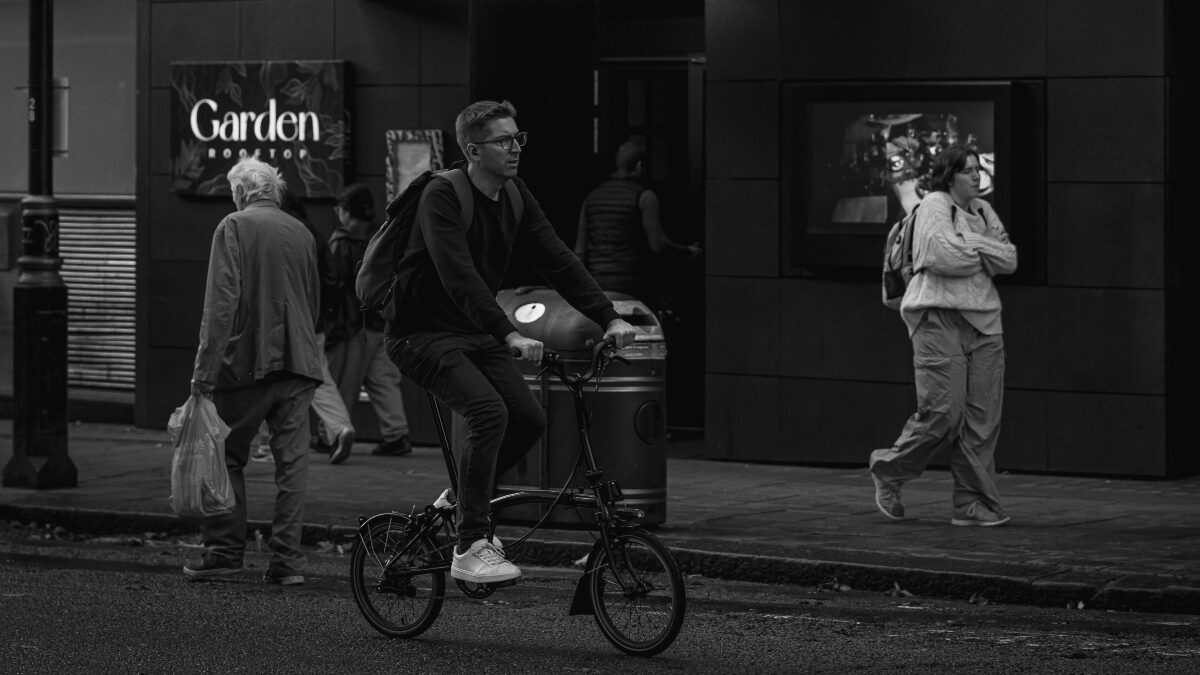
Folding bikes are a space-saving, compact option designed to be stored inside, under desks, and are ultimately the perfect commuter bikes for anyone living in a town or city.
Historically a part of military transportation, these British BSA Airborne folding bikes would be strapped to soldiers in WWII when parachuting in, allowing them to cross the battlefield efficiently.
The Bickerton Portable came out in 1971 as one of the first commercial folding bikes in the UK, but Andrew Ritchie’s Brompton folding bike is an icon of British manufacturing and a common sight in London’s cycle lanes today.
Folding bikes are more popular than ever, but finding the right type is important to match your needs.
Why buy a folding bike
There are so many reasons that a folding bike is a great buy, from their ease of use to their financial savings. We’ve reviewed some of the key benefits before you buy.
Ease of use
The ease of use of folding bikes is one of many reasons to purchase a folding bike. With a relaxed geometry, one-size-fits-all design, and the fold itself, a folding bike is an easy bike to handle, whether being ridden or being transported.
Due to their 16” wheels, folding bikes like the Brompton C line offer a nimble ride and fast acceleration, perfect for city riding. Folding bikes with 20” wheels the Decathlon Fold 560 still offers agility and quick acceleration, but also makes for a more comfortable ride across varied terrains.
Unlock multi-modal travel
Folding bikes solve a common problem when it comes to long journeys, by unlocking multi-modal travel options.
If you have a journey that includes driving or a long walk either side of a train, a folding bike can immediately speed this journey up, as well as make it cheaper.
Rather than being counted as a bicycle when folded, transport companies in the UK count them as luggage in the same way as a suitcase or shopping bag. This means you can start your journey by bike to the station, fold your bike and enter the train/bus/tube as normal, and then complete the last part of your journey by bike again.
Multi-modal travel is difficult with a standard bike or e-bike, due to restrictions on tubes and trains depending on lines and providers. With a folding bike, you can take it on any form of transport with no issues.
| Bike Type | TfL (Tube, Overground, Elizabeth) | National Rail Trains | Buses & Trams |
| Folding Bike | Permitted Anytime | Permitted Anytime | Permitted Anytime |
| Folding E-Bike | Permitted Anytime | Permitted Anytime | Permitted Anytime |
| Standard Bike | Off-Peak Only (Surface lines only) | Reservations Only and Off-Peak Only | Banned |
| Standard E-Bike | Banned (Fire safety regulations) | Reservations Only and Off-Peak Only | Banned |
Source: TfL: Cycles on Public Transport
National Rail: Train Travel with Bicycles
Everyday utility
Folding bikes fit seamlessly into every part of your life, be it at home, work, public spaces, or shopping.
Storing bikes at home can be a struggle, especially if you live in a flat or shared house. Storage within the home is limited, and keeping a bike outside comes with a big risk of theft, as well as damage from the elements. Instead, a folding bike can simply be stored away in a corner or storage cupboard without taking up much room.
Going out with friends won’t be a problem with a folding bike either. You can visit restaurants, cafes, pubs etc., essentially anywhere you would usually lock a bike up, and keep the bike by your side. Cinemas will usually lock your bike up in their office, but you will need to check ahead of time.
Theft prevention
Theft prevention is one key part of owning a folding bike. There won’t be many times you will have to leave your bike unattended, so theft opportunities are practically zero. It is still important to get cycling insurance, in case your bike is stolen, either when left unattended for a short period, or while you’re riding. Insurance is also there for accidents or repairs.
How to choose which folding bike is for you
While folding bikes have a one-size-fits-all design, there are several factors you need to take into account; size, weight, whether you want an e-bike vs non e-bike, the kind of fold, and whether you want to buy new or second hand.
Size & weight
The size of the bike comes down to two factors: the size of the wheels and the design of the frame.
Folding bikes typically come in 16” and 20” wheels, providing a different type of ride with each. Standard folding bikes, like the Brompton C line, come with 16” tyres which are suitable for most urban journeys and keep weight down and storage easier. Bikes with 20” tyres are typically designed to be more rugged, coming with wider tyres and a frame to suit some gravel or bumpier route, but this makes for a slightly heavier bike.
Frame design plays a big factor in the weight of the bike. The most common material used in folding bike frames is aluminium or steel, with some models coming in titanium and/or carbon fibre.
Entry and mid-range folding bikes are made with aluminium like the Tern Link D8, and steel like the Brompton C Line, weighing in at 12kg and 11kg respectively. At this weight, it’s easy enough to carry for short distances and no problem to wheel around while folded.
Weight savings make a big difference when you start to look at higher-end models, such as the Brompton T Line which comes in at around 8kg. This will make it significantly easier to carry, as well as making it nippier to ride.
Folding e-bikes are quite a lot heavier than standard folding bikes. The Brompton C Line electric for example weighs about 15kg with the battery and the Brompton T Line electric, the lightweight model of Brompton bikes, is still around 13kg with the battery. Other folding e-bike models, like the Brompton G Line electric (around 17kg) and the Decathlon E-Fold 900 (19kg) are even heavier. From personal experience of owning a Brompton C Line electric, the weight means they’re still okay to carry but wheeling will be the preferred option for longer periods of transporting while folded.
With this in mind, you will need to weigh up the size and weight versus the rides you’ll be doing and transportation needs when folded.
E-bike vs non e-bike
The choice between an e-bike or a standard folding bike comes down to several factors: cost, weight, average journey, and folded travelling requirements.
Folding e-bikes are naturally more expensive than their non-electric counterparts, and will be a big consideration with any purchase. An e-bike version starts at around £1,500 while a standard folding bike starts at around £900, a significant difference. If you look at one of the most popular mid-range folding bike models, the Brompton C Line electric, prices start at £2,999, compared to a standard Brompton C Line that starts at £1,399.
Folding e-bikes come with a motor, battery, and stronger frame, which means a heavier bike. With the electric assist generated, you won’t feel the additional weight when riding, but when folded and carried or wheeled, the additional several kilos can make a big difference to overall usability and should be considered when weighing up a purchase (pun intended).
New or second hand
The decision to purchase a new or second hand bike is also an important one. The second hand market for bikes is always a good place to find a deal, but the folding bike market is different, with them holding their value far more. After a quick look on Facebook Marketplace, you can find a 2025 Brompton C Line for around £1,100, only a few hundred pounds less than a brand new 2026 model.
Purchasing second hand will save money, which can go towards accessories for your new bike. There are several considerations when you’re buying a second hand bike to ensure you’re getting a legitimate and roadworthy bike: check if the seller is the legitimate owner, and check the condition of the bike.
To check if the seller is the legitimate owner and the bike isn’t stolen, request the bike frame number to check on the BikeRegister website.
When considering the condition of a folding bike, there’s more to look over than a standard bike because of the folding mechanism and hinges. Start with the hinges and welding points where the frame is more likely to crack, before checking pivot points. You will then need to check over the whole frame, especially forks and rear triangle, for any rust that could affect the integrity of the frame. Finally, check the fold of the bike for any stiffness or misalignment.
Purchasing a new folding bike comes with obvious benefits. One benefit is the extended warranty that comes from many manufacturers, such as Brompton who offer a 7 year warranty on their frames when signing up. This will give you the peace of mind that if anything happens to your bike in the manufacturing process, you will be able to get it fixed or parts replaced.
The main benefit of purchasing a new folding bike is the fact you don’t have to worry about checking the frame condition and battery health. As well as arriving in perfect condition, you will have the latest components in your choice of the latest colours, and the newest e-bike technology to power your journey.
Finally, buying a new folding bike allows you to take advantage of the Government Cycle to Work Scheme offered by your employer. Rather than purchasing the bike outright, you can purchase it through your employer using a salary sacrifice on a monthly basis. The government removed the £1,000 max cost, and depending on your tax bracket, you can save 32% – 42% on the total cost.
Folding bike maintenance
Cleaning and maintaining your folding bike is important if you want to get many years of riding out of it. You will need to take care of parts with specific bike cleaners, ensure the chain, hinges, and folding components are cleaned and sufficiently lubricated, while avoiding the use of a jet wash. The cost of neglect can be very expensive, with proprietary parts and tools required for at-home replacements, or a trip to the bike shop.
Cleaning your folding bike is the best way to keep you riding all year round while avoiding the expense of routinely replacing parts. Some people recommend a clean after every ride, but this would be a little OTT, especially if that ride is just a commute to work and back. On an especially wet or dirty commute, a quick brush and dry of hinges and folding mechanisms, followed by a wipe of the frame to remove dirt and water, will go a long way in maintaining your folding bike’s condition.
A monthly or clean every other month is something to schedule in, especially if you’re riding frequently each week. For a thorough clean, you will need:
- Frame cleaner
- Chain cleaner
- Microfiber cloths
- Brushes
- Light lubricant
- Chain lubricant
- Bucket and warm water
- Isopropyl alcohol
To clean your folding bike properly, start with the frame, spray it with a frame or general bike cleaner such as the Muc-Off bike cleaner. Avoid using washing detergent like fairy liquid as this will strip the protective coating on the frame. Once you’ve carefully sprayed the frame and wheel rims (avoiding your brake rotors, pads and the electric motor), you can agitate the cleaner by brushing it gently, before washing it off with water.
After you’ve cleaned the frame and wheels, you can start on the drivetrain. Start by dampening the chain before applying the drivetrain cleaner, either with a cleaner tool or by spraying on directly. Again, agitate it with a brush before rinsing and wiping off with a cloth.
If your folding bike uses disk brakes, you can use isopropyl alcohol applied to a clean cloth to wipe the rotors clean.
When your bike is dry, you can spray a clean microfibre cloth with GT85 and wipe the frame, this will give it a bit of protection from moisture and a light lubrication. GT85 can then be sprayed in hinges and on the inside of the rear triangle, which can be a hotspot for rust with the steel frames in personal experience. Finally, if you’re not immediately applying chain lubricant, you can use a separate microfibre cloth with GT85 or use the little straw to apply directly to the drivetrain.
When you eventually need to replace parts, this isn’t always straightforward. Compared to a standard bike, folding bikes have far more components and specialist parts that require ongoing care and replacement. Due to more complex folding mechanics, Bromptons have a lot of proprietary parts such as seatposts, handlebars and stem, bottom brackets, and wheels. This means that replacing any parts will need to be Brompton-specific. Other folding bikes however, such as bikes from Tern, have more standard parts and are easier to replace.
There are some parts that are easy enough to replace at home, while some things are better off being left to the professionals in your local bike shop. Starting with tyres, you will need to purchase the correct size of tyre, and keep an eye out for any proprietary sizing like Brompton. First let the air out of the tyres, before using tyre levers to pry the old tyres off the wheel. Place the inner tube inside the new tyre and inflate slightly, before fitting the new tyre onto the bike using a tyre lever to feed the tyre beads into the wheel correctly.
Being able to change the brake pads on your folding bike at home when they become worn is also a good skill to have, especially if you would like to save some money. You will be able to tell when your brakes need changing if they’re starting to become unresponsive and you can visibly see the wear on the pads.
To change the brake pads on a rim brake folding bike, loosen or unhook the cable tension and remove the wheel, undo the bolt that holds them in and slide them out, before slotting in the new pads and tightening up again, making sure to align them correctly.
If you have a disk brake bike, take the wheel off and gently push the pistons back into the caliper, remove the pin holding the pads in and replace them with the new pads, making sure to put them on the correct side. You can then use the isopropyl alcohol to wipe the rotors clean. Once everything is in place and tightened appropriately, bed the brakes in with several progressively harder stops from low speeds.
When it comes to jobs that need to be done at the shop, our recommendation would be to leave things like chain replacements, brake cables, hydraulic brake bleeding, drivetrain care, and bottom bracket servicing, as well as any electrical care to the professionals. Both Balfe’s bikes and Sigma Sports offer excellent in-store bike servicing, or you can get support from your local independent bike shop.
Recommended folding bikes
Choosing the right folding bike comes down to several things: cost, e-bike vs non e-bike, and size. Here are the top picks to suit every budget and riding need.
Decathlon Fold 560
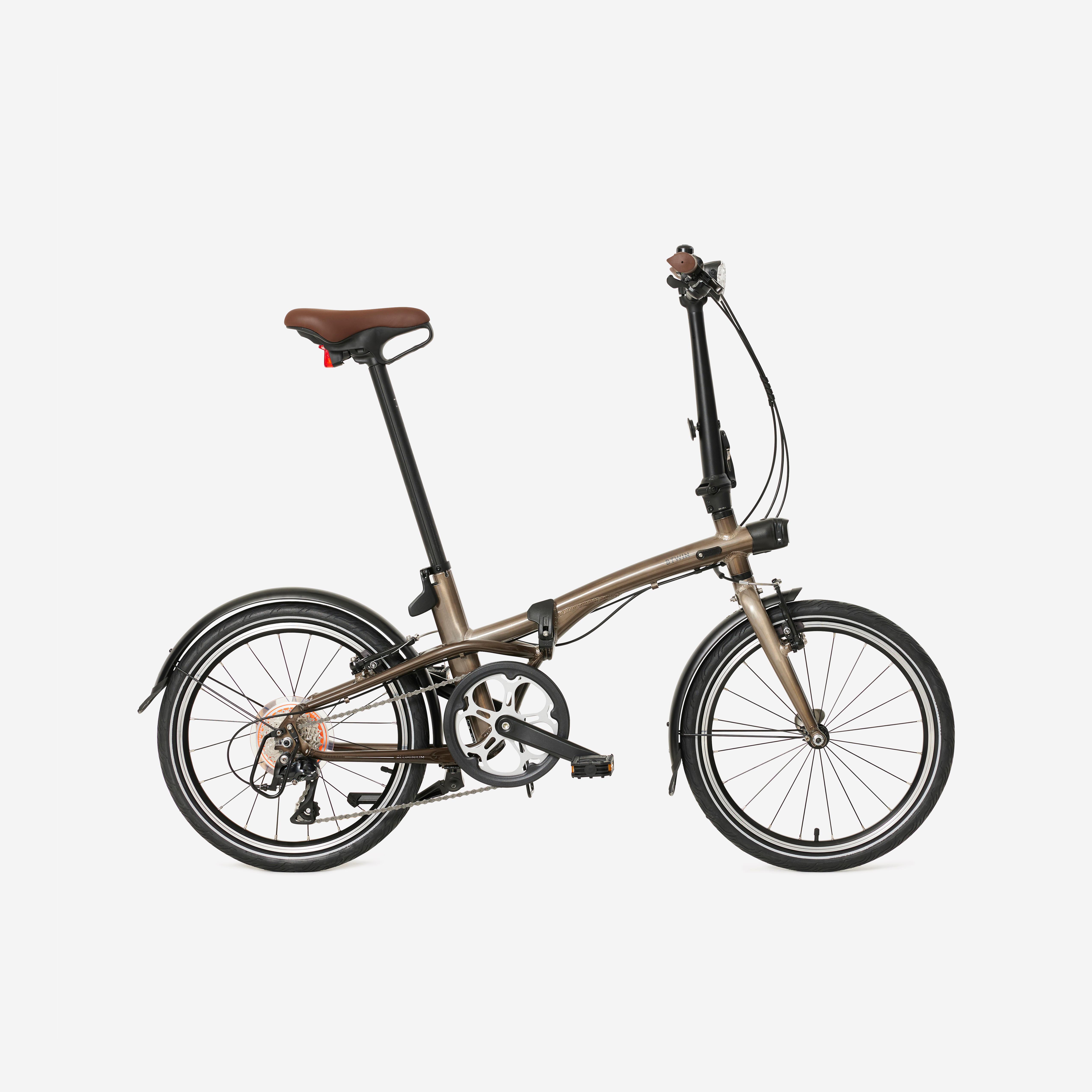
Folding Bike Fold 560 Lacquered Aluminium
The Decathlon Fold 560 is an excellent budget folding bike at £549.99. The Fold 560 has a 9-speed Shimano Sora, a solid mid-range groupset used on full road bikes.
The Fold 560 comes with 20” wheels, larger than the 16” wheels of the Brompton C line, making for a slightly more comfortable ride, especially over varied terrain.
The weight of the Fold 560 is around 12-13kg due to its aluminium frame, which isn’t the lightest on the market, but is still light enough to manage carrying short distances. The bike’s fold design is different to that of a Brompton or a Tern, with it folding sideways on itself. This makes for a less compact fold but it’s still sturdy with its frame stand, and can be wheeled along by extending the seat post and tilting backwards.
Finally, the Fold 560 comes with a lifetime warranty on the frame, covering any manufacturing defects and frame integrity. This makes the £549.99 price even better value, and an excellent bike for those looking for a great commuter bike on a budget.
Tern Link D8

Tern Link D8 Folding Bike 2026 in Satin Peacock Green
The Tern Link D8 is a great entry-to-mid-range folding bike. Priced at £900, it sits comfortably between the Brompton C Line and the Decathlon Fold 560.
Featuring 20” wheels like the Fold 560, the Link D8 provides a smooth ride across varied terrain, while its Shimano Claris 8-speed groupset has enough range for a comfortable journey, including hills. Shimano Claris is a mid-range groupset, and while a lower spec than the Shimano Sora of the cheaper Fold 560 from Decathlon, you won’t notice this difference in everyday riding.
The frame of the Link D8 is made from aluminium and weighs 12kg, similar to that of the Brompton C Line and the Fold 560. This makes the bike easy to carry over short distances, but when folded it can be wheeled on its rear wheel.
The Link D8 comes with a rear rack and mudguards, as well as Schwalbe Big Apple tyres with Kevlar puncture protection, meaning the bike is commuter-ready out of the box.
With its 8-speed drivetrain and being commuter-ready, all for a price of £900, the Tern Link D8 is an ideal option for a commuter looking for a mid-range folding bike, while not looking to spend Brompton prices.
Brompton C Line

Brompton C Line 12-Speed Folding Bike 2026 in Matt Black
The Brompton C Line is the mid-range bike that most people will think of when thinking of a folding bike, and the perfect option for a first-time folding bike buyer. It’s a common sight on a morning commute in London. In 2025 Brompton sold about 78,500 bikes, highlighting their popularity.
You have the choice of a 4-speed for simple city riding, or a 12-speed for a more versatile option, ideal for longer and hilly rides.
The Brompton C Line frame is made from steel, giving it a weight of around 11-12kg. This is heavier than the top range P line, but is about average when compared to similar mid-range folding bikes.
At £1,399 for the 4-speed and £1,819 for the 12-speed, the Brompton C line sits in the mid-price range of folding bikes, reasonable for a bike that’s handmade in London. It’s also available on the Cycle to Work Scheme via selected sellers.
The second-hand market for Bromptons is strong, with a sizeable online market as well as bike shops selling certified second-hand bikes.
Brompton P Line

Brompton P Line Explore 12-Speed Folding Bike 2026 in Lunar Ice
The Brompton P Line is Brompton’s high-end, lightweight folding bike. The main upgrade from the C line is the titanium rear triangle and fork, saving 700g, as well as using lightweight components to save a total of around 2kg for a final weight of around 10kg. This weight saving makes carrying the bike, especially up stairs, significantly easier.
The P line also comes in 4-speed and 12-speed options, as well as the same 16” wheels as the C Line.
At a starting price of £2,319, the P Line is one of the most premium folding bike options on the market, but is still available on the Cycle to Work scheme via most large retailers.
The Brompton P Line is for someone looking for a lightweight, premium folding bike that can be carried easily, and used as an everyday bike, as well as just a commuter.
Brompton C Line Electric
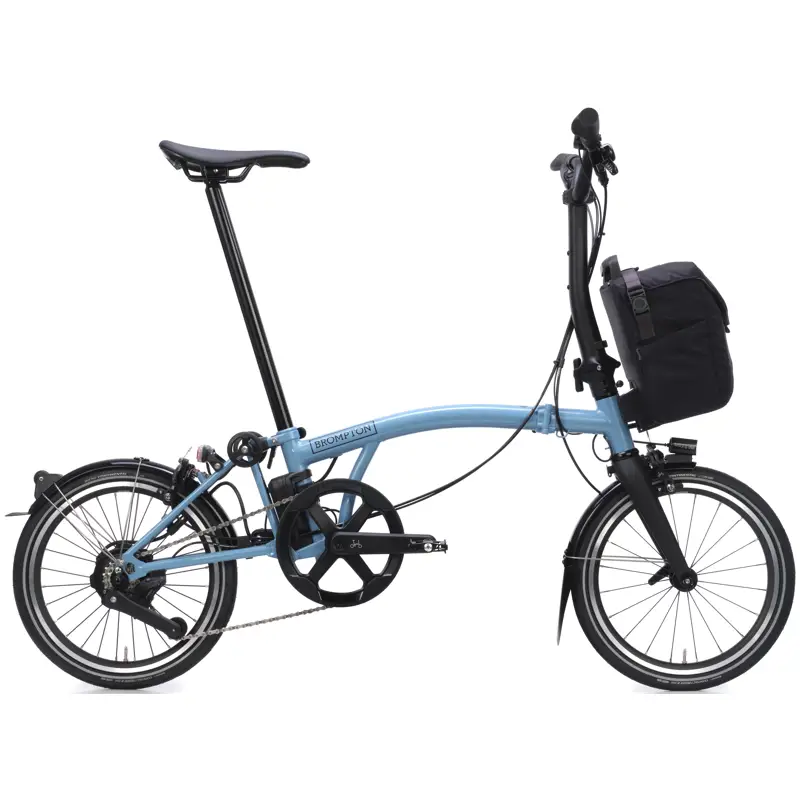
Brompton Electric P Line 4-Speed Folding Bike 2026 in Cloud Metallic
The Brompton C Line Electric had a significant upgrade in 2026 on the previous C Line electric model, with a new 250W rear hub motor (previously this was a front hub motor), and a 345Wh removable battery, providing around 90km of range and can be removed from the bike and charged in 4-5 hours.
With three levels of pedal assist, the impact of fewer gears with the 4-speed version will be felt a lot less than the standard C Line, making it a perfectly adequate option for most urban commuters.
The main difference between the standard and electric C Line is the weight, the addition of a motor and battery, as well as reinforced forks to cope with the electric drivetrain, means the C Line Electric weighs around 15kg, about 3kg heavier than the standard version. This makes lifting and carrying significantly more difficult, but it can still be wheeled in ‘shopping trolley mode’ – the bike folded with the handlebars still out and rolled with the small wheel on the rear fender.
The Brompton C Line Electric starts at £2,999 for the 4-speed version, over £1,600 more than the equivalent Brompton C Line 4-speed, but still cheaper than other electric folding bikes like the Tern Vektron S10 (£3,499). The premium vs other folding bikes comes with the electric assist when completing multi-modal or longer journeys, meaning you can travel further with less effort and sweat.
From personal experience of owning a Brompton C Line Electric (2021 version), the electric assist makes most commutes easy and means there’s no need for a shower at the office. The difference in weight is noticeable, but with the addition of the rear rack with roller wheels, pulling the bike along means there’s little need to carry.
Tern Vektron S10

Tern Vektron S10 Electric Folding Bike 2025 in Satin Black
The Tern Vektron S10 is a premium folding e-bike, priced at £3,499 it’s the most expensive of the selection. It includes a Bosch Performance Line motor, one of the best mid-drive drivetrains available, offering up to 300% pedal assistance. The Vektron S10 also comes with a Bosch PowerPack 400Wh battery, giving you up to 100km range from a full charge. Steep hills, commutes, and leisure rides will be no sweat.
The Vektron S10 comes with a rear cargo rack, capable of carrying 27kg. This is significantly heavier than what other folding bikes can carry, and opens up options not available with other bikes, such as child carriers and large shopping.
With the weight addition of the motor and battery on the Tern Vektron S10, the total weight comes to around 21kg, this is about 6kg more than the Brompton C Line Electric, and about 8kg more than a standard Brompton C Line. At 21kg, the Vektron S10 isn’t a bike you’ll want to carry, beyond lifting onto a train or up some stairs, but the bike can be wheeled easily on its rear wheel when folded.
The Vektron S10 comes with a 10-speed Shimano Deore groupset. Usually found on mountain bikes, this groupset is designed for wider gear ranges which suit varied terrains and will complement the Bosch motor well, as well as carrying heavier cargo.
Every other folding bike mentioned in this list uses rim brakes, but the Vektron S10 comes with Magura MT4 hydraulic disc brakes. With the 21kg weight, the stopping power and reliability of disc brakes will make a noticeable difference, especially in wet weather.
The Tern Vektron S10 is ultimately for someone riding long distances each week, with little to no carrying required, with the fold being more of a requirement for storage, rather than transporting the bike.
Conclusion
A folding bike is the ultimate urban commuter bike. Its smaller wheels make for a nippier and more agile ride, perfect for commuting in towns and cities. E-bike options are a game changer for longer commutes, while still keeping the compact design.
The fold means you can easily store the bike under a work desk, cafe table, or in a cupboard, and transport the bike on a bus or train for an effective multi-modal commute.
From personal experience, a folding bike is a great bike for your everyday commute, and gives you the peace of mind that you can have it by your side when out and about, rather than locking it up. To find the right bike for you, visit our folding bike page to compare prices across retailers.